
The Illusion
Same Words. Different Worlds.
Lately, I've been noticing a pattern in conversations about AI. Different rooms. Different companies. Different roles. But somehow, the same words keep showing up: AI transformation, AI agents, automation at scale, and AI-first organizations.
At first, it feels like alignment. But the more you listen, the more you realize: we're not talking about the same thing at all.
In one conversation, "AI agents" meant a smarter way to automate customer support. In another, it meant systems that could eventually replace entire workflows. And in yet another, it meant tools that assist teams — copilots, not replacements.
Same terminology. Completely different expectations. When language aligns but meaning doesn't, it creates a quiet form of misalignment that is hard to detect — and even harder to correct.
Three Different Realities
Multiple Strategies, One Umbrella
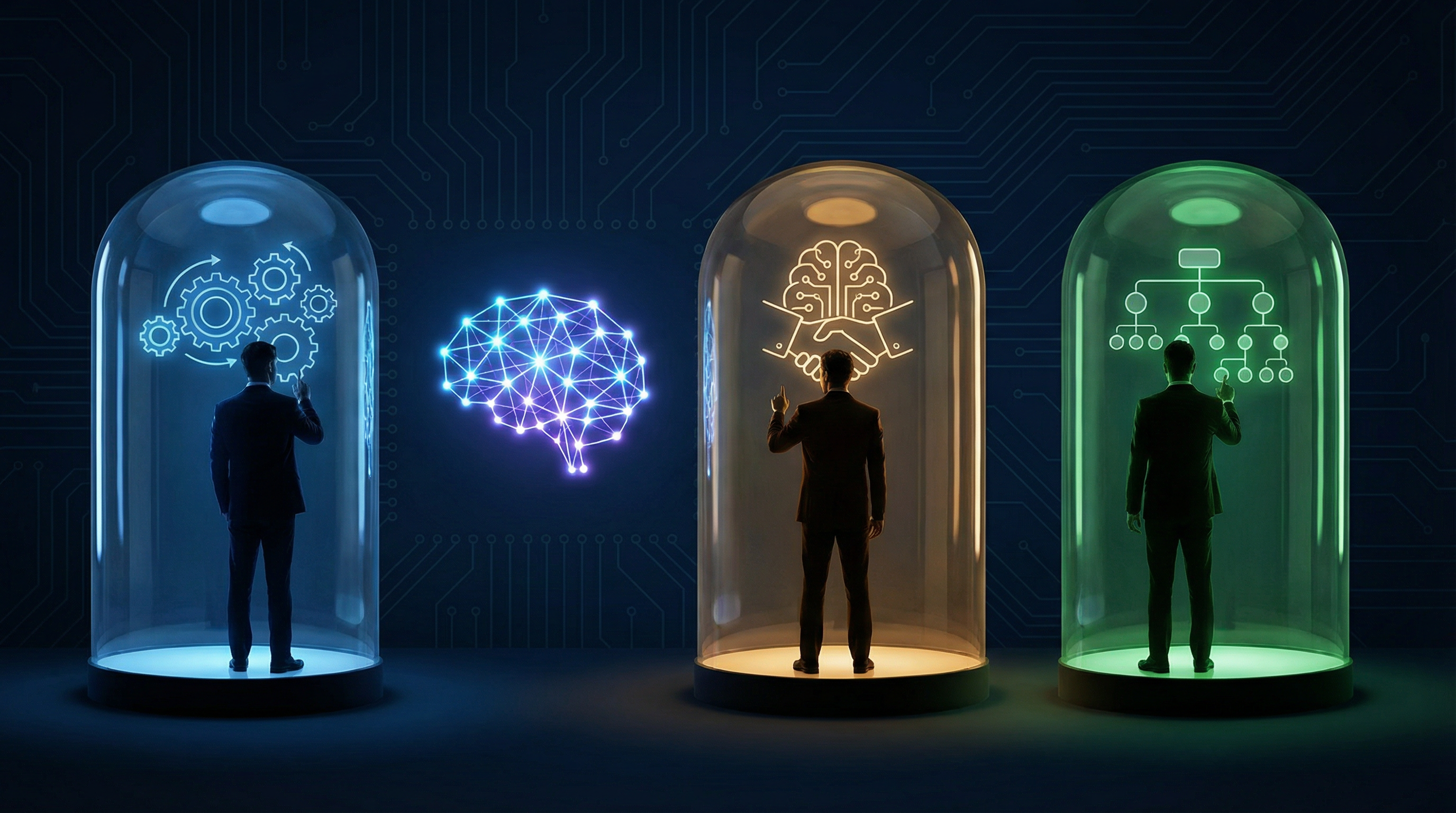
What I've been observing is not a single AI strategy, but multiple ones coexisting under the same umbrella.
AI as an Efficiency Layer
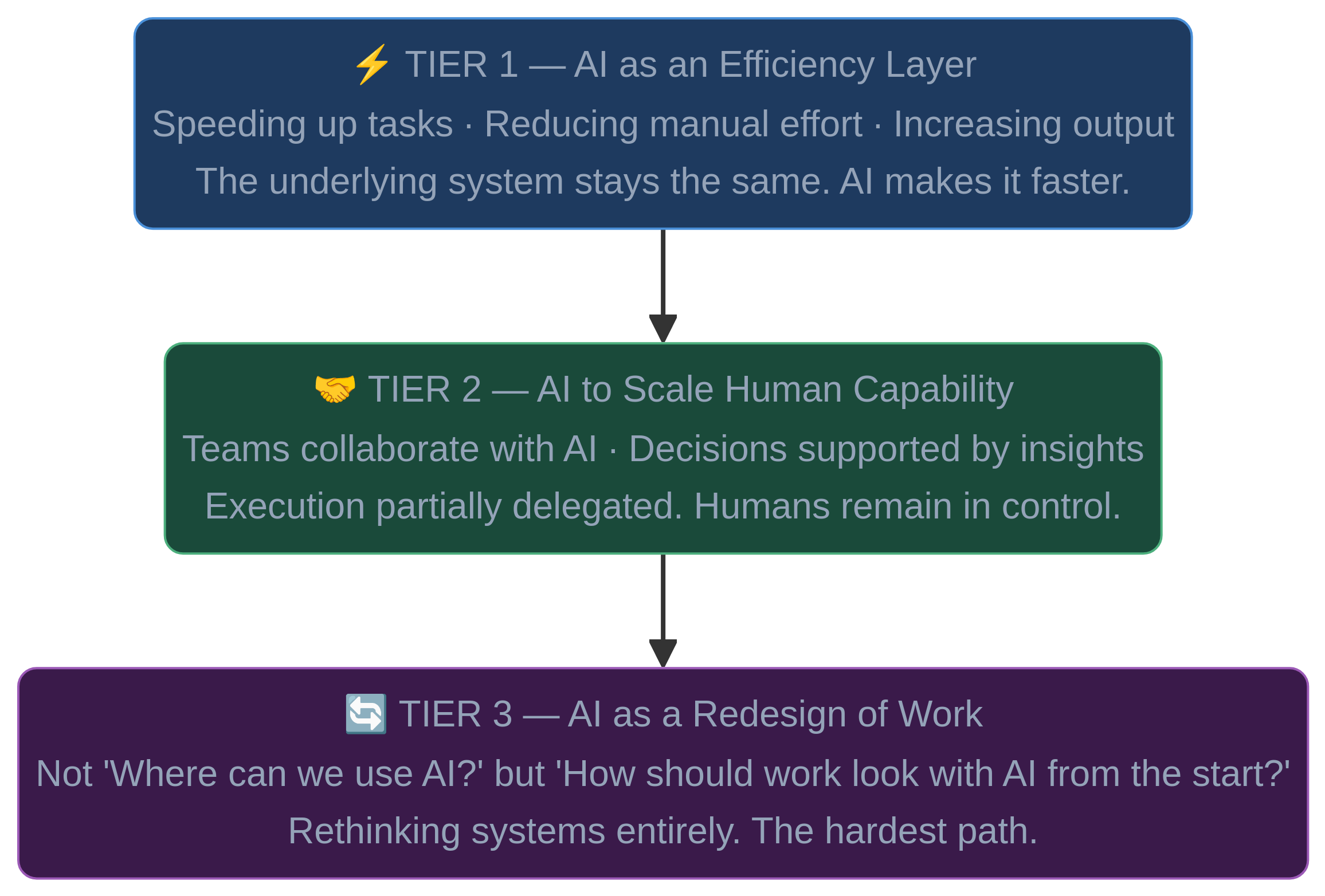
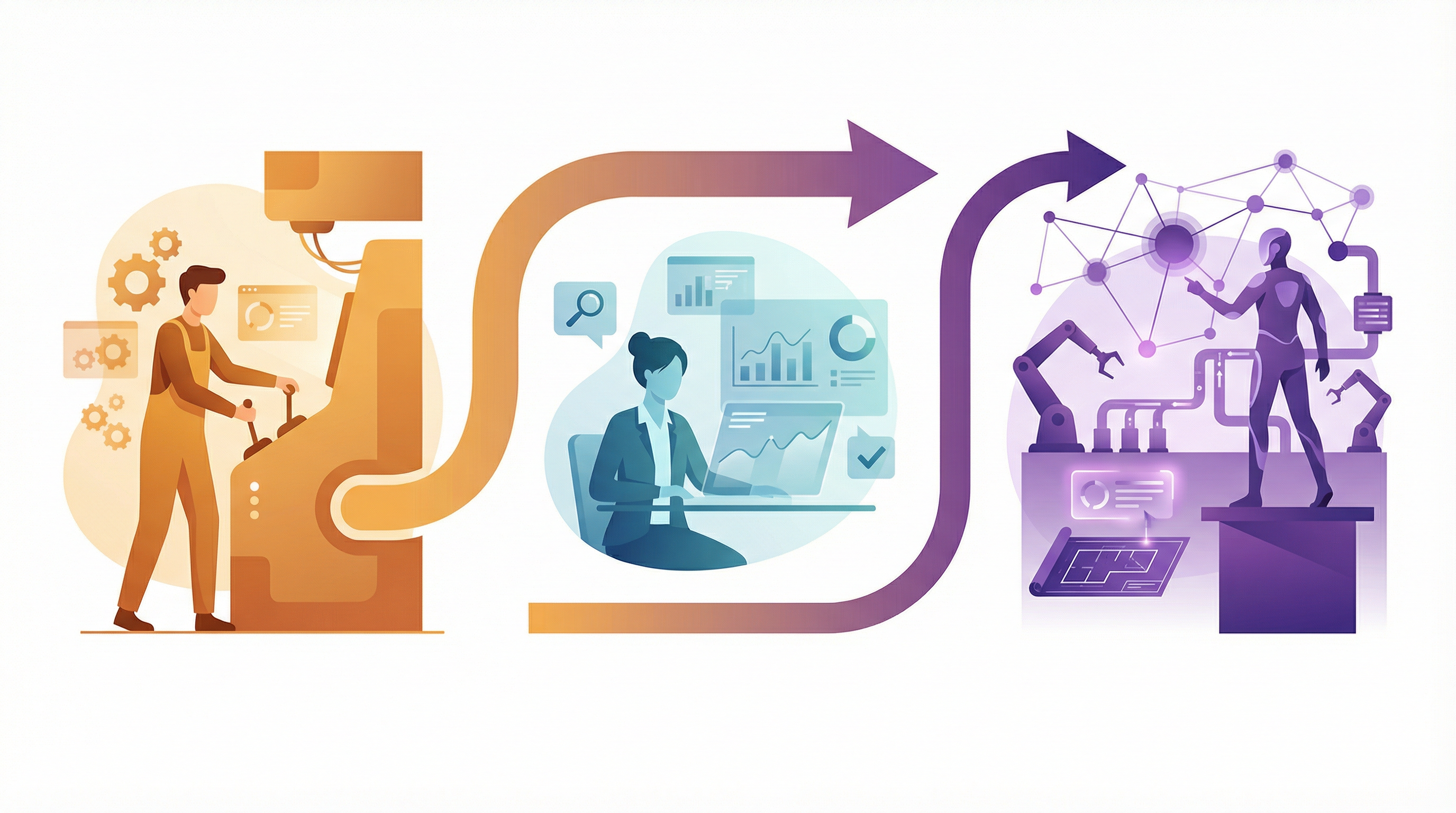
In many cases, AI is used to improve what already exists: speeding up tasks, reducing manual effort, and increasing output. The underlying system doesn't change. AI simply makes it more efficient.
AI as a Way to Scale Human Capability
In other cases, AI becomes part of how work is done. Teams collaborate with AI tools, decisions are supported by generated insights, and execution is partially delegated. Here, the shift is more visible — but still anchored in human control.
AI as a Redesign of Work Itself
And then there are a few cases where the question changes entirely. Not 'Where can we use AI?' but 'How should work look if AI is part of it from the start?' This is less about tools, and more about rethinking systems. It's also the hardest path.
The Big Tech Divide
Same Words, Different Worlds
This misalignment is not just theoretical — it's visible in how large technology companies approach AI, even when they use similar language.

Take OpenAI and Microsoft. Both talk about AI agents, copilots, and transforming productivity. But the way they operationalize this is different. OpenAI is pushing the boundaries of more autonomous systems — exploring agents that can reason, plan, and execute tasks across tools with increasing independence. Microsoft, on the other hand, has embedded AI into existing workflows through Copilot — in tools like Word, Excel, Teams, and GitHub. The focus is not replacing workflows, but augmenting them where people already work.
Same narrative: AI transformation. Different reality: autonomy vs augmentation.
Another contrast can be seen between Amazon and Google. Amazon has been applying AI deeply within operations: logistics optimization, supply chain systems, and internal productivity. Much of it is invisible to the end user, but critical to how the business runs. Google, in contrast, has focused more on user-facing AI: search, assistants, and generative interfaces.
Same ambition: AI-first. Different expression: operational depth vs user interaction.
What these examples show is not that one approach is right or wrong. It's that even at the highest level, companies are making fundamentally different choices about where AI creates value, how much autonomy to allow, and how humans remain involved. And yet, from the outside, it often sounds like they are all doing the same thing.
The Evolution of Human Involvement
No One is Removing Humans
Despite all these differences, there is one thing that seems consistent: No one is truly removing humans from the equation. If anything, the opposite is happening. Companies are becoming more intentional about how humans stay involved.
Human-in-the-Loop
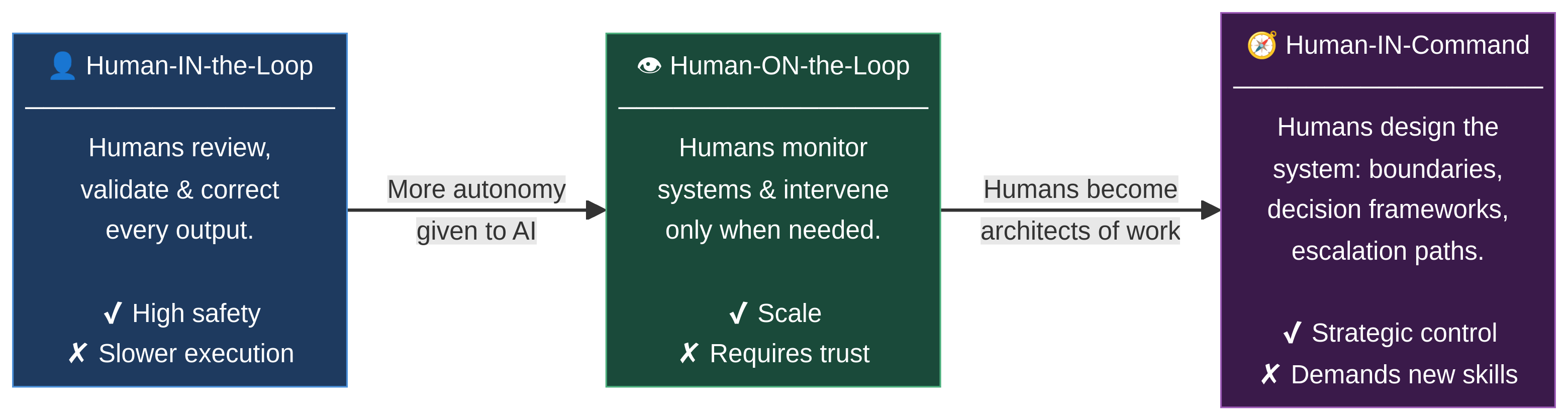
Humans are directly involved — reviewing, validating, and correcting. This creates safety, but also slows things down.
Human-on-the-Loop
Humans step back from execution, but remain present — monitoring systems and intervening when needed. This creates scale, but requires trust in the system.
Human-in-Command
Humans are no longer part of the flow of work — they design it. They define boundaries, decision frameworks, and escalation paths. They are not doing the work. They are shaping how work happens.
The Shift Underneath Everything
From Execution to Orchestration
What's changing is not just what we do, but how we relate to work itself.
And this shift is subtle. It doesn't happen in big announcements. It happens in small changes: who makes decisions, when humans intervene, and what gets delegated.
The Risk No One is Addressing
We Assume Alignment Where There Isn't Any
The biggest challenge is not the technology. It's that we assume alignment where there isn't any.
When we say: "We're investing in AI," are we optimizing? Augmenting? Transforming? Because each of these requires a different mindset, a different structure, and a different level of change.
Maybe the real question isn't: "Are we adopting AI fast enough?" But rather: "Do we actually agree on what we're building?"
AI is often framed as a technological shift. But what I keep seeing is something else. A shift in responsibility, decision-making, and the role of humans inside systems. And perhaps that's where the real work is. Not in adopting AI, but in being intentional about how we design the relationship between humans and it.
Self-Assessment
Which Reality Is Your Organisation Moving Toward?
Answer five questions to find out which AI strategy your organisation is actually pursuing — and the honest question you should be asking next.